EVERYTHING YOU NEED TO KNOW ABOUT NORTHERN LIGHTS
To understand the Aurora
Explore the mystery of the Aurora Borealis.
Touching the Stars
We owe the Aurora, admired at night, to our Sun :). It is its constant activity that provides us with the "fuel" necessary for auroras to form. The energy of the Sun, as a massive ball of plasma, results from thermonuclear fusion reactions, during which (under conditions of extreme pressure) hydrogen nuclei combine to create helium atoms. This is accompanied by the release of enormous amounts of heat and light.
The seething plasma at the star's surface and the uneven rotation of the Sun (our Sun is a ball of gas) cause magnetic field lines to behave in a disordered way.
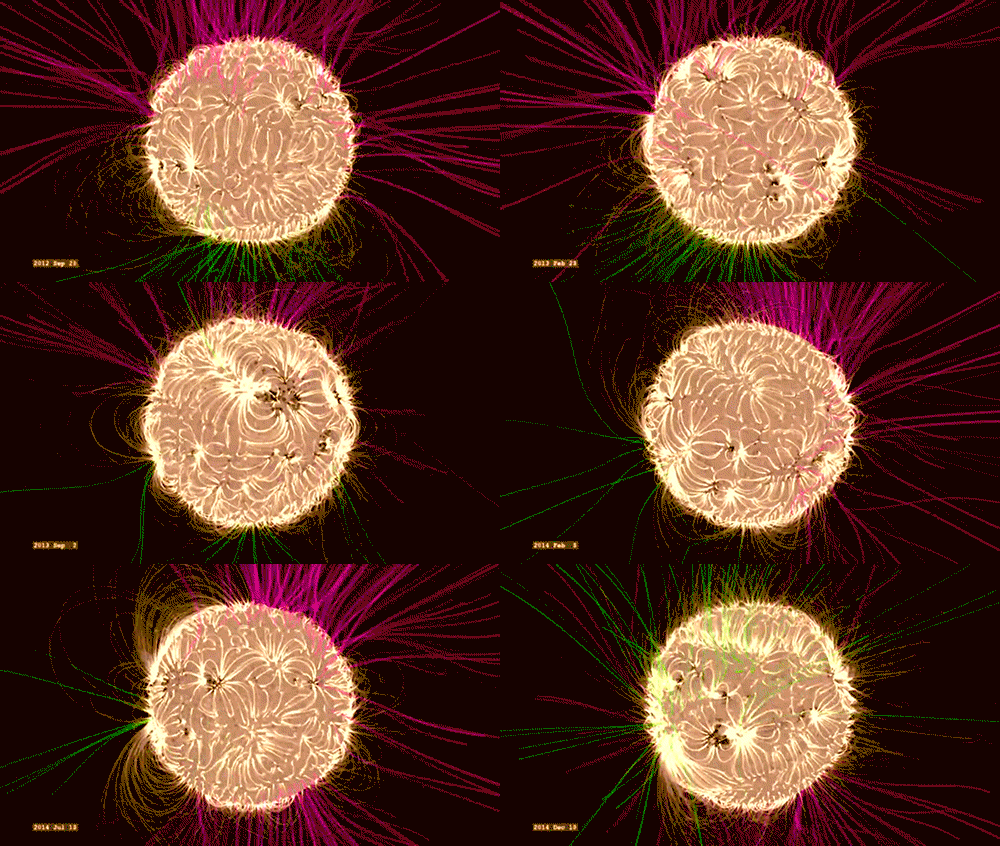
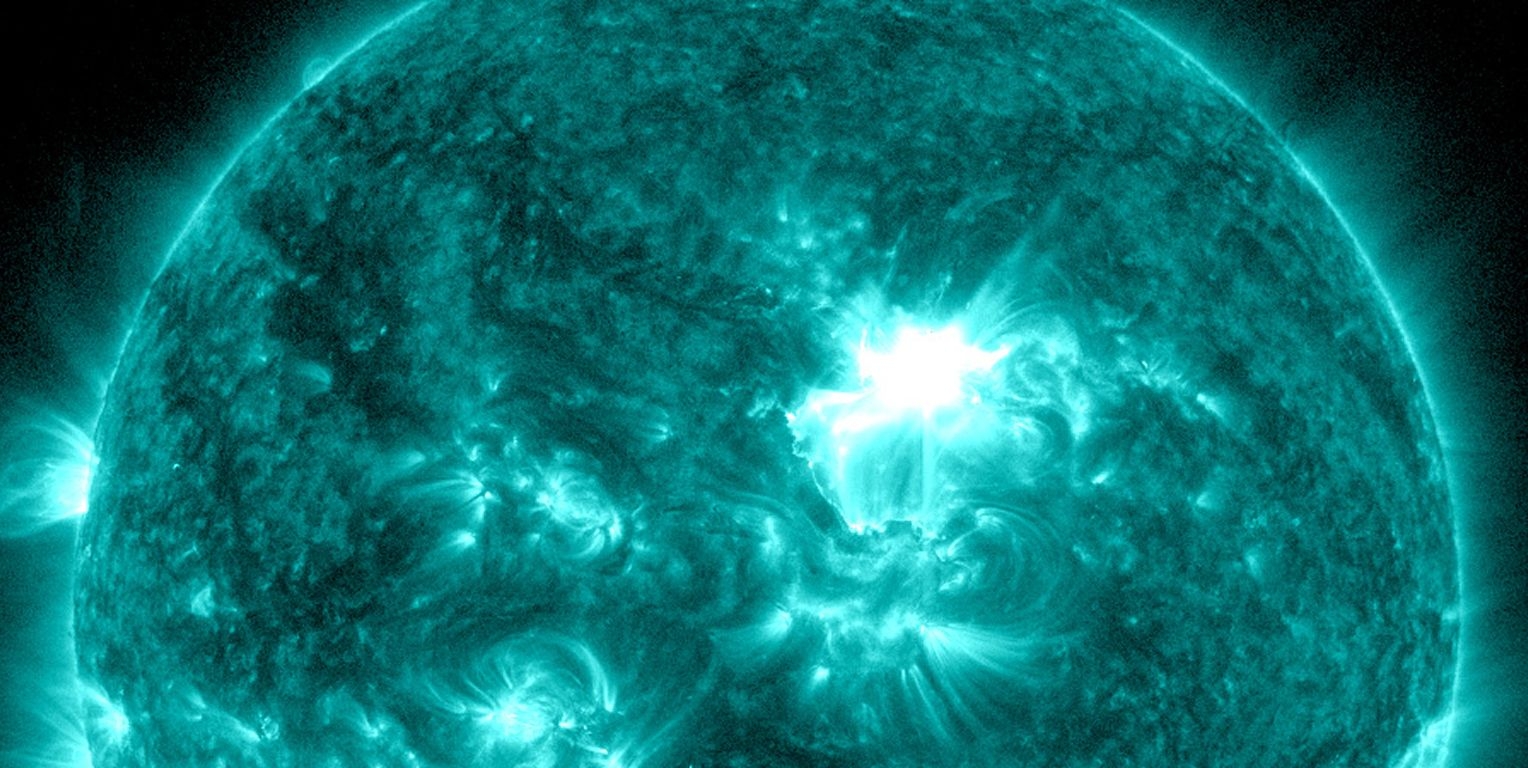
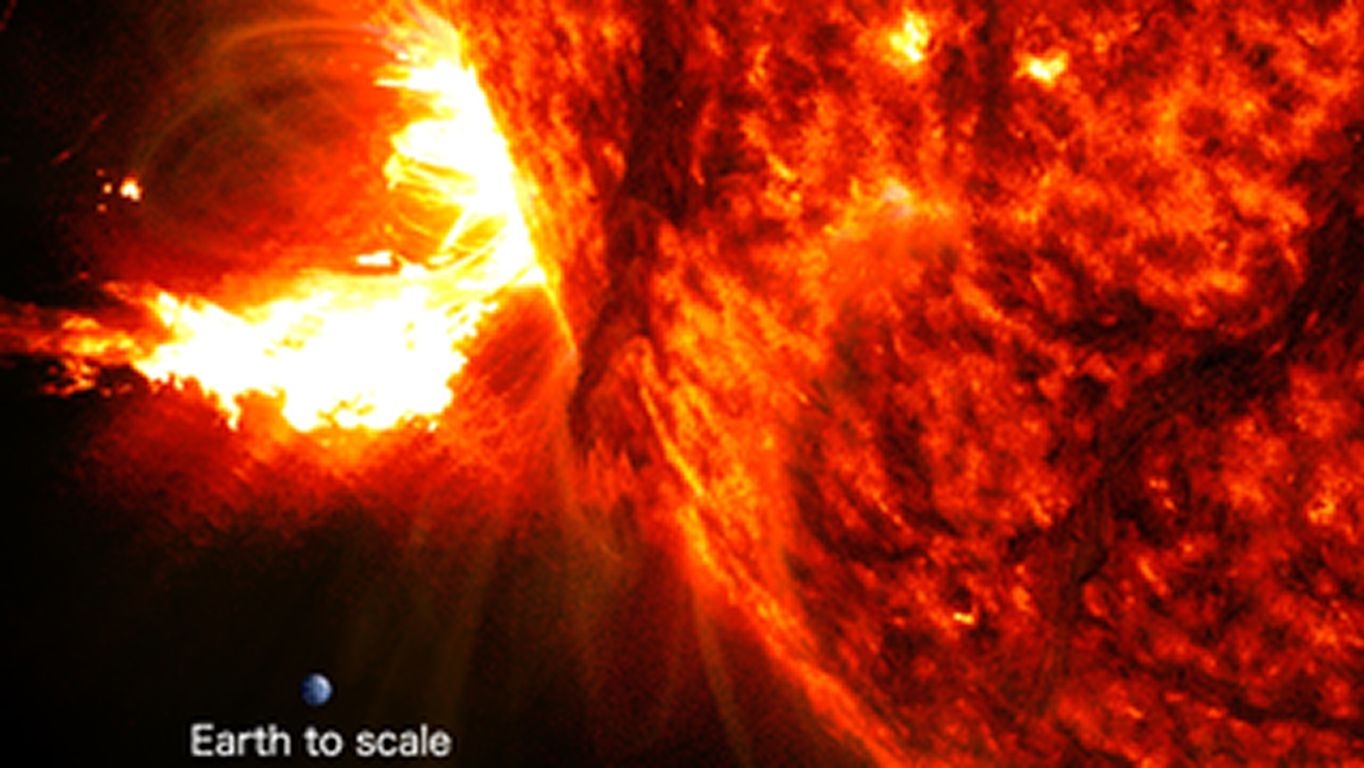
They twist more and more until, at a certain moment, a phenomenon called magnetic reconnection occurs—the connecting of magnetic field lines, or effectively their destruction. This is how solar flares are born—emissions of radiation across the full electromagnetic spectrum. Flares can be accompanied by massive explosions that eject powerful amounts of plasma into space. We call the largest of these CMEs (Coronal Mass Ejections). Quite often, solar wind (a stream of charged protons and electrons) is also blown out from a coronal hole with an open magnetic field, which additionally supports the plasma cloud and gives it greater speed.
The Cosmic Trio
Observing the Sun and predicting the aurora would not be possible without the various probes we have sent into space.
GOES Satellites: Initially, these inform us about how strong the flare was by measuring the X-ray flux. The speed of light means this information appears just minutes after the flare. These American meteorological satellites are positioned 35,790 km above Earth and monitor space weather on the side.
SOHO Probe: At the same time, the SOHO probe enables observation of the flares. It is equipped with, among other things, a coronagraph (a disk blocking direct sunlight, allowing observation of fainter details) and a set of instruments for studying the Sun's surface and heliosphere.
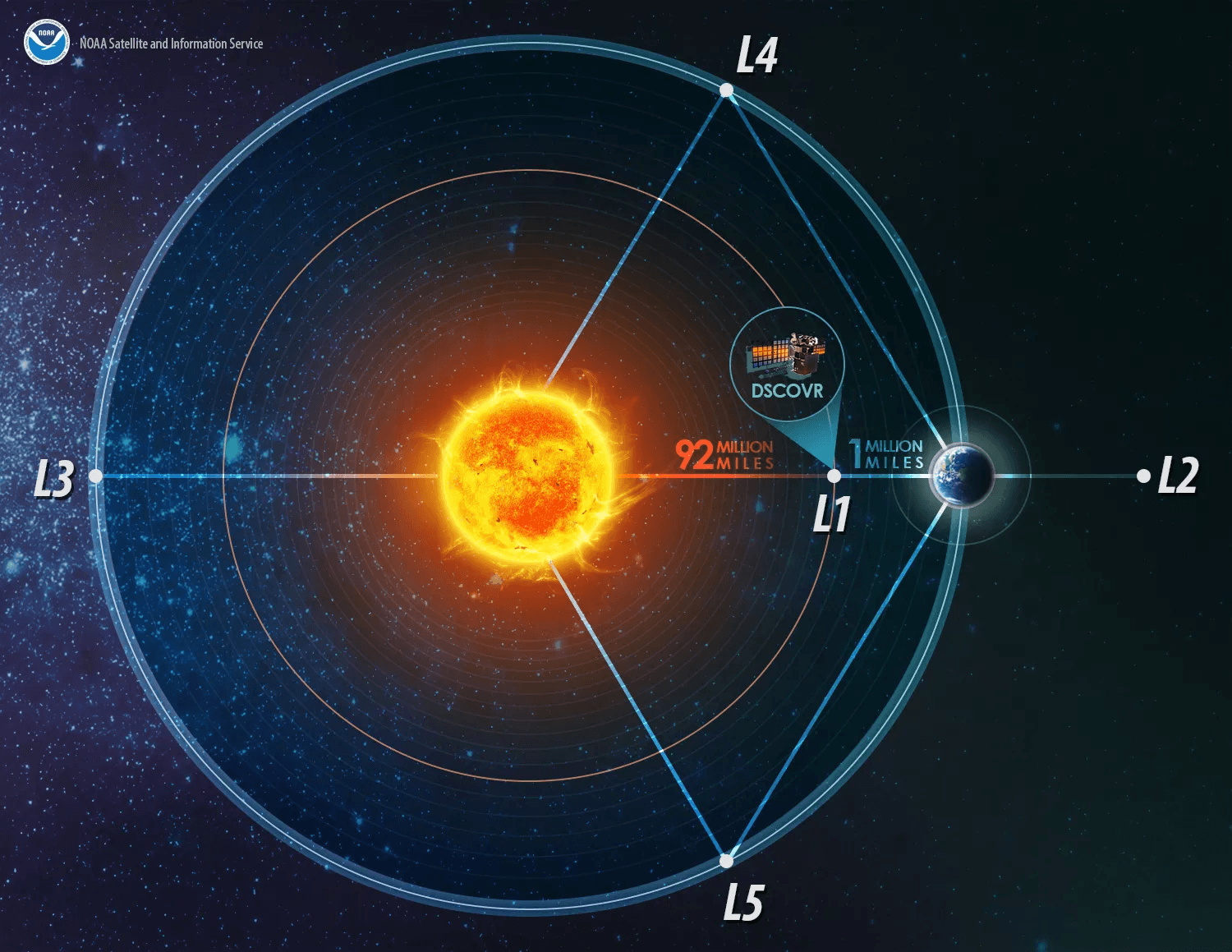
DSCOVR ProbeVR Probe: This probe orbits the Lagrange Point L1, approx. 1.5 million km from Earth. At this point, the gravitational forces of the Sun and Earth balance each other out. The DSCOVR (Deep Space Climate Observatory) is located here. Its task is to measure solar wind (and warn of its dangers) and analyze plasma. For us, aurora hunters, its work is invaluable. But why is it so important?
Cosmic Wind
When a CME occurs "facing" Earth, we have the potential for an aurora borealis to form. However, before we can see it, many conditions must be met.
First — is the flare strong enough? We categorize power into 4 classes: the weakest B, C, M, and the strongest (and rarest) X. There are also 9 levels within each category. Thanks to GOES satellites, we can know almost immediately what force we are dealing with. The stronger ones may be accompanied by a plasma ejection.
Matter ejected from the Sun becomes a source of a magnetic field itself, possessing its own poles and orientation in space. We call this the IMF – Interplanetary Magnetic Field; this is what is analyzed by the DSCOVR probe, and this information is most crucial for us.
DSCOVR measures 3 main attributes:
- Particle Speed: Average approx. 450 km/s, though the range is quite broad (approx. 250 to even 2000 km/s).
- Particle Density.
- Intensity: Described by the general value Bt, and its orientation (component Bz, positive or negative).
Speed and density together inform us about the total energy of the cloud (they must be strong enough to reach Earth's poles), while intensity, studied by a magnetometer, hints at how "willingly" (with what power) the cloud will "attach" to Earth's magnetic field. In this measurement, orientation in space is extremely important: interaction between the cloud's particles and our atmosphere will only occur in the case of a Southern orientation. If the IMF has a Northern orientation, its particles will be "repelled" from Earth, and unfortunately—no aurora! But just so it isn't too easy — the spatial orientation of the IMF can flip at any moment, which only highlights the elusive nature of the Aurora :)
From the moment it reaches the DSCOVR probe, under the influence of electromagnetic forces inside Earth's magnetosphere, the stream of particles accelerates significantly, yet it still gives us several dozen minutes to get dressed and prepare our cameras.
That Famous Kp Index
Most "aurora alert" style apps operate using the Kp index. It is nothing more than a final summary of all the previously discussed processes. It is provided "live" by the NOAA Space Weather Prediction Center (SWPC), taking into account readings from magnetometers already located on the Earth's surface.
Kp is given on a 10-degree scale (0-10) and defines geomagnetic disturbances. IMPORTANT: Geomagnetic disturbances do NOT equal an aurora borealis; they describe the probability of its formation. We assume that a Kp above 5 indicates a possible aurora.
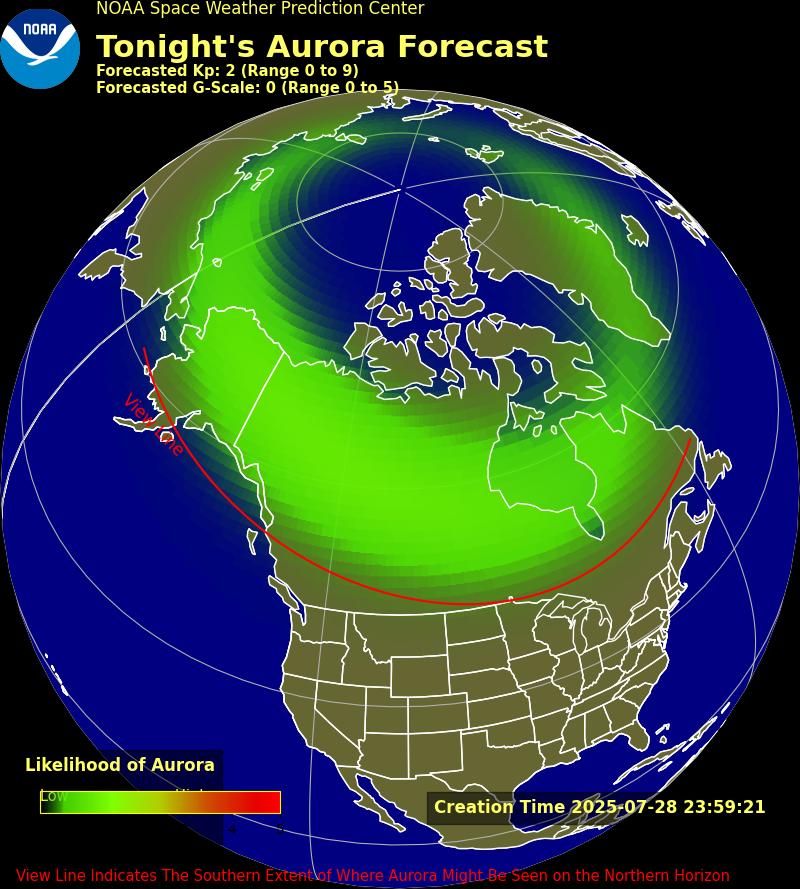
All-sky camera at the Swedish Institute of Astrophysics
The frame is positioned as if you were lying on your back with your head facing north and looking up at the entire sky.
The aurora borealis at the edge of the image is at its zenith at a distance of approximately 300 km.
The images are refreshed every minute.
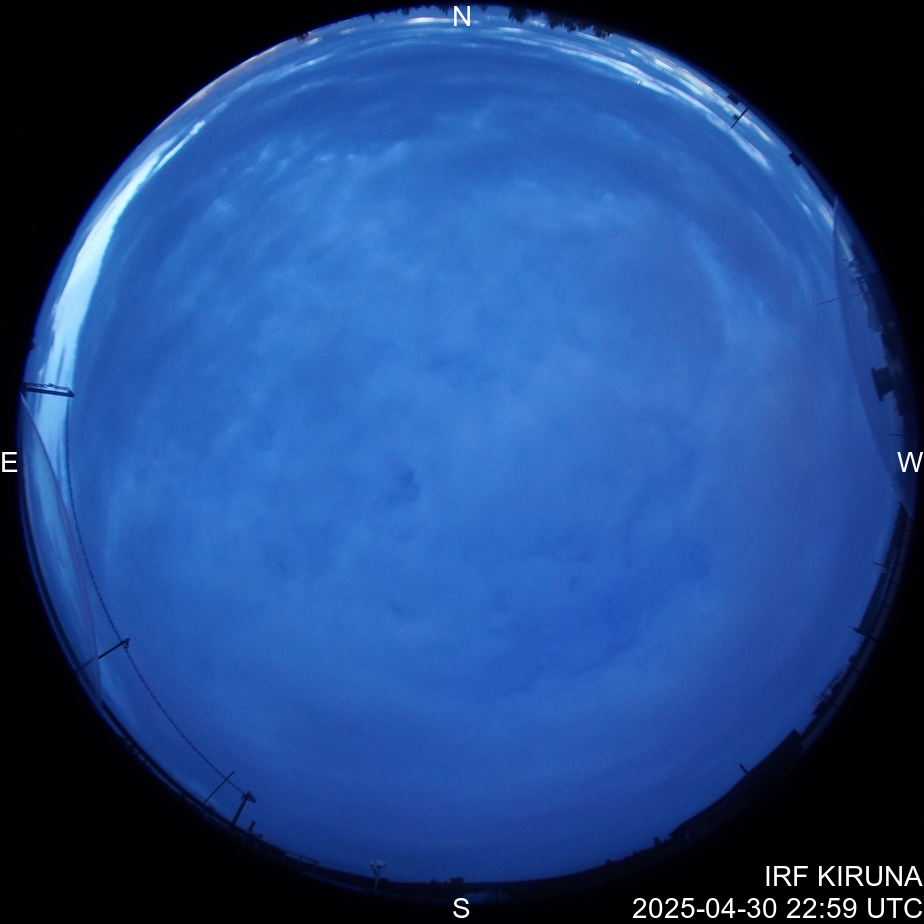
30-minute forecast provided by NOAA
This model provides a short-term forecast of the auroral oval's intensity for the Northern Hemisphere.
It is based on solar wind and interplanetary magnetic field (IMF) conditions measured by the ACE spacecraft.
The map shows the intensity and location of the auroral oval at the time indicated in the right corner of the map.
At locations up to 1,000 kilometers north or south of the auroral oval, the aurora may still be visible near the horizon under optimal viewing conditions.
Loading aurora forecast...
Colors of the Aurora...
As we all know, the aurora is the result of collisions between electrons originating from the Sun and gas molecules present in our Earth's atmosphere. It is time to learn more about its colors.
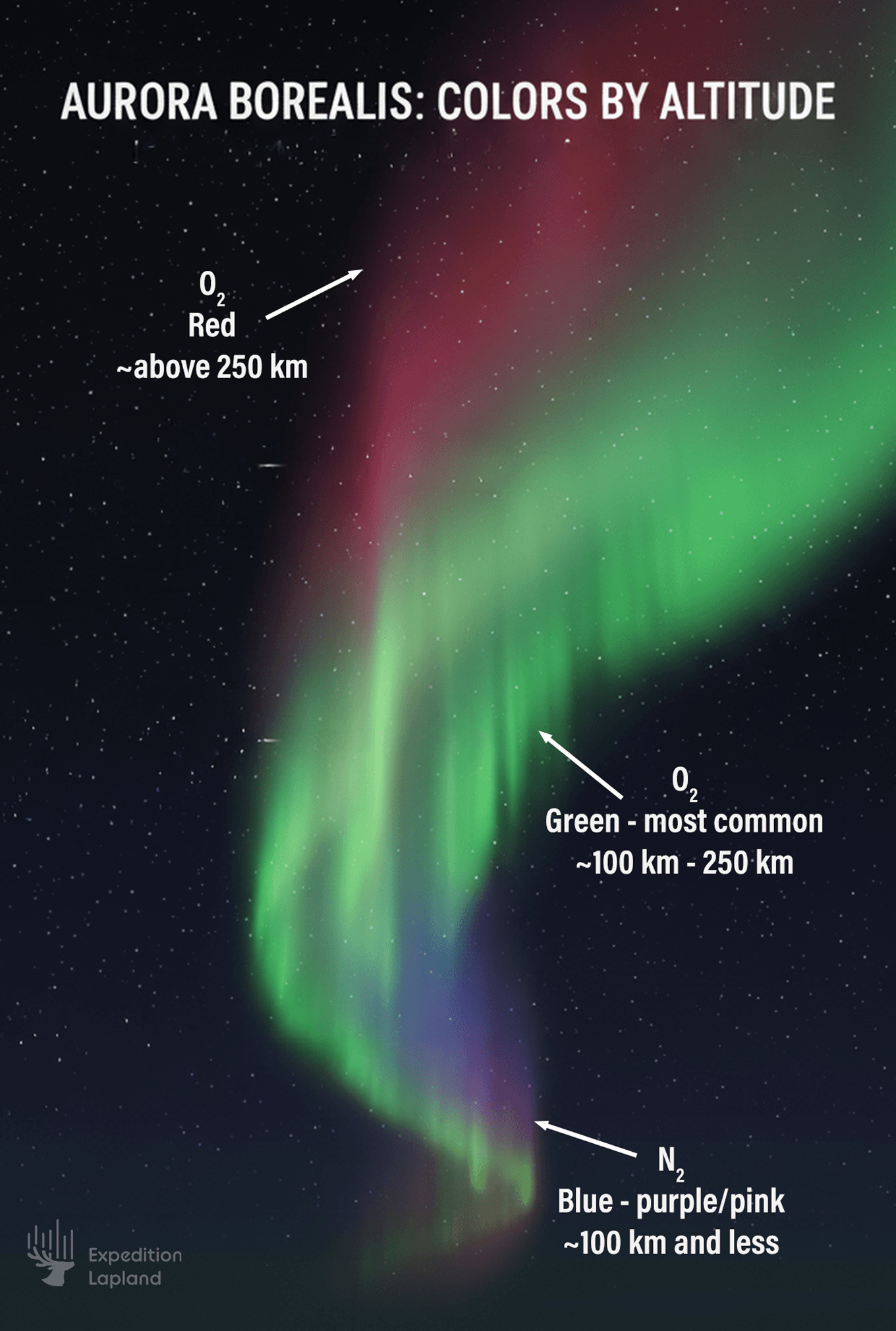
Earth's atmosphere has a layered structure; as the distance from the surface of our planet decreases, the density and variety of atoms and molecules increase. In this situation, the highest parts of the atmosphere are bombarded by the fastest-moving electrons. The lower you go, the more electrons are "intercepted," and the speed drops.
The highest-located oxygen molecules get charged with electrons most strongly, but this excess energy must be released as a photon. Each molecule/atom will release excess energy at a frequency specific to itself, which we see as different colors. The most strongly "excited" oxygen will release it in the form of red light. This essentially explains why, in the case of strong auroras seen far to the south, the prevailing color is precisely red.
Lower down, the density of oxygen atoms increases, and the atmospheric composition becomes richer in other elements, so the time (and thus the amount of transferred energy) for exciting oxygen atoms decreases; hence, instead of red, the green color appears—the most dominant one in auroras.
It is only at altitudes of about 100 km above Earth that interactions with nitrogen and helium atoms occur, resulting in blue, violet (purple), and sometimes pink/red colors.
... and its fanciful shapes
Every aurora is an absolutely unique spectacle. This happens because its behavior depends on local properties of the magnetic field — and Earth's magnetism is also subject to constant, subtle changes. Additionally, solar wind particles do not travel along magnetic field lines — they move spirally.
All the processes described above (and quite a few others!) influence the final shape of the luminous spectacle: sometimes it will be an oval/corona, other times the sky will turn green, and if we are a bit lucky, we will observe moving curtains of light, swirls, or "angel wings".
If you don't want to freeze or live too far from aurora-active regions, check out the available cameras online.
More info
 Current data and charts of auroral activity
 Space weather monitoring and predictions
 Observations of the Sun and the heliosphere
 Geostationary satellites; analyses and forecasts
 DSCOVR satellite website
 5
5Aurora Hunt & Moose Sausage BBQ
Experience the magic of the Aurora Borealis with a tour that combines the thrill of the chase with the authentic flavors of Lapland.
 Kiruna, Sweden
 3 - 5 hours hours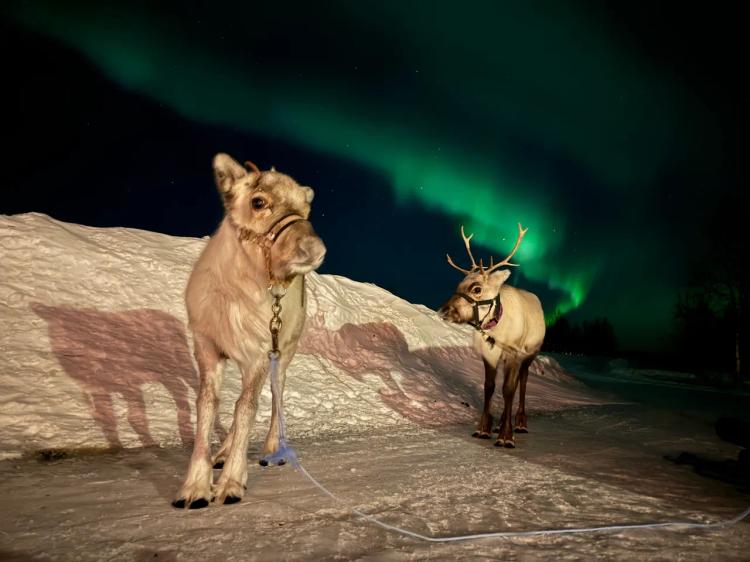
Evening reindeer feeding and Northern Lights hunt
Join a unique Arctic adventure that combines reindeer, Sámi culture, and the magic of the northern lights.
Kiruna, Sweden5 hours hours